

cervical & lumbar spinal decompression therapy
dRX 9000 CARLSBAD
WHY NON-SURGICAL SPINAL DECOMPRESSION is the better solution!
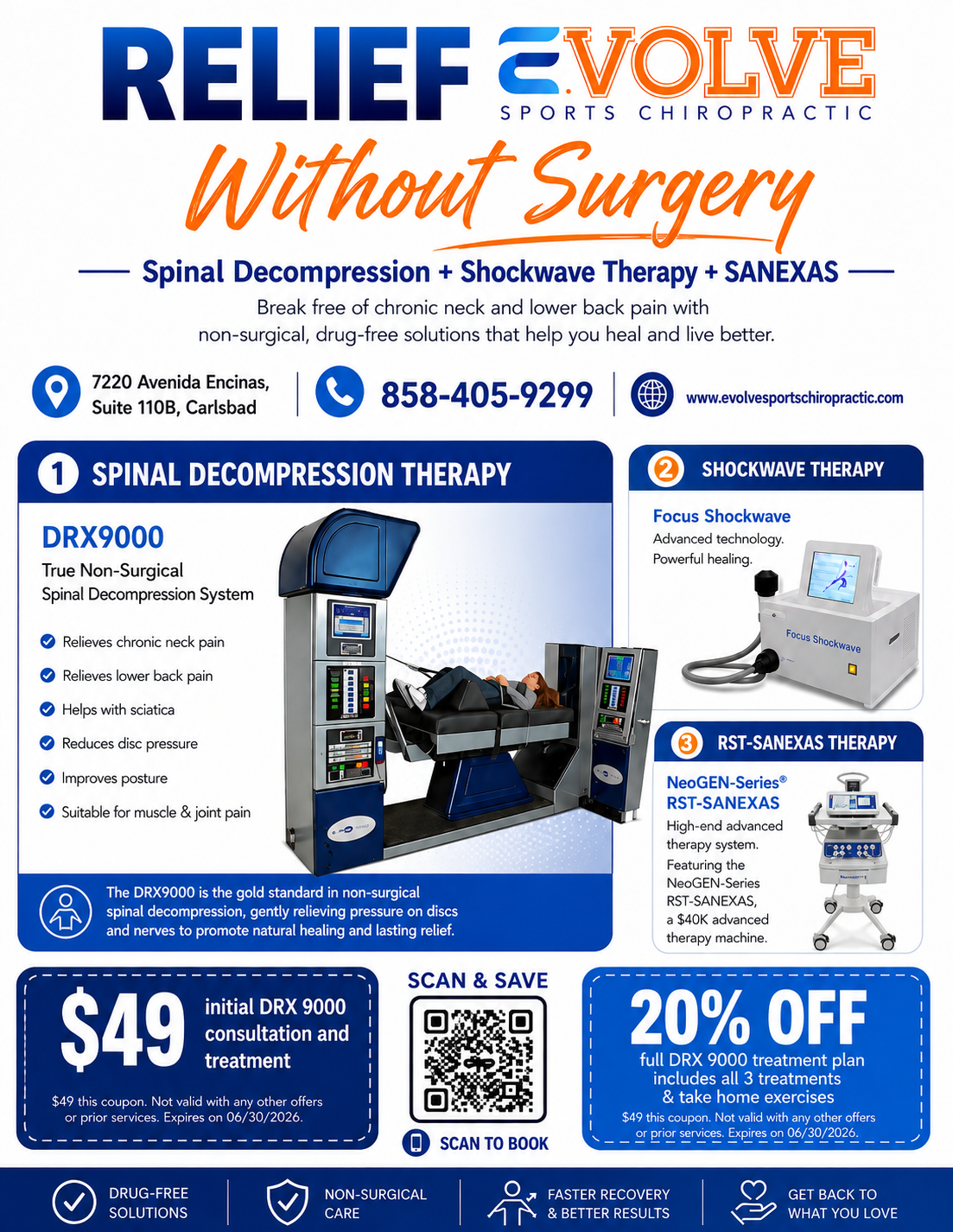
What is non-surgical spinal decompression?
Non-surgical spinal decompression therapy is a treatment designed to relieve pressure on spinal discs and nerves by gently stretching the spine with a computerized DRX 9000 decompression table.

FREQUENTLY ASKED QUESTIONS
Q: Who is a good candidate for non-surgical spinal decompression therapy?
If you have been told you are a candidate for surgery you may qualify for non surgical therapy. If you have bad pain but are not bad enough for surgery according to your surgeon, epidurals don’t work or wear off, physical therapy, massage, chiropractic acupuncture and pain management have not fixed the problem permanently, you may qualify for non-surgical spinal decompression. Consulting with the doctor will determine if you are in the right place, a possible candidate and weather or not you can get your case accepted.
Q: WHAT TO EXPECT for drx 9000 treatment protocol
DRX9000-treatment course looks roughly like this:
Session length: about 30 minutes of decompression/traction.
Frequency: often several sessions per week initially.
Course: commonly 6–8 weeks rather than just a few treatments.
Progression: traction force and/or treatment parameters are adjusted based on tolerance and response rather than using one fixed force for everyone.
Adjuncts: some protocols include class IV laser, sanexas cell signaling therapy, focused shockwave therapy, massage/myofascial work, heat or ice before/after traction.
What the actual decompression cycle feels like
Rather than continuously pulling at maximum force, the machine generally uses intermittent traction—alternating periods of pulling and relaxation. You should generally feel a firm, controlled pulling sensation, not sharp pain, significant numbness, or worsening leg symptoms.
Q: Is non-surgical spinal decompression right for me?
Although spinal decompression therapy is certainly a revolution in effective, non-invasive treatment for severe back and neck pain, it is not for everyone. Spinal decompression therapy is usually recommended for patients who have an MRI showing herniated or bulging discs, low back or neck pain, who have failed conventional therapy (physical therapy and chiropractic), and who are considering surgery. Typically, the people who tend to have the best results fall into one of the following categories:
Pain due to herniated and bulging lumbar/cervical discs that is more than four weeks old.
Sciatica
cervical radiculopathy(“pinched nerve” in te neck)
Lumbar radiculopathy
Chronic neck or lower back pain
Degenerative disc disease
Spinal Stenosis
Facet Syndrome
Recurrent pain from a failed back surgery that is more than six months old.
Patients available for treatment plans of 15-24 sessions over 4-8 weeks.
Patients at least 18 years of age.
There are some cases where people should not undergo spinal decompression therapy. These include:
Pregnancy
Spinal cancer
Severe osteoporosis
Abdominal aortic aneurysm
Abdominal surgery within last years
Lumbar fusion of the affected symptomatic level
Unstable spondylolisthesis
Disc infections
Severe peripheral neuropathy
Osteomyelitis
Meningitis
Does spinal decompression therapy work for everyone?
Eighty-to-ninety percent of patients who have been properly selected and comply with the Spinal Disc Decompression protocol will have good-to-excellent outcomes. Patient’s conditions that do not respond quickly to the therapy are often unable to be helped by anything quickly. Patients vary in age, sex and body morphology and may require counseling in weight loss, exercise, nutrition and other lifestyle changes.
